Headlines
Sleep With Married Men And Face Up To 10-Year Imprisonments— State Assembly Passes Bill Banning Single Women

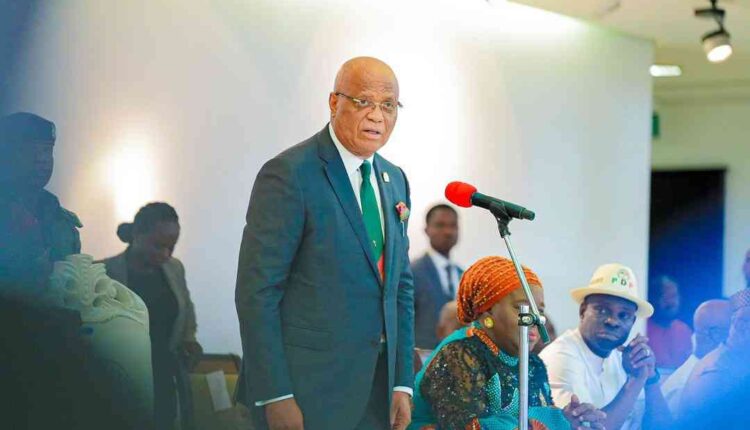
Sleep with married men and face up to 10-year Imprisonments. The State House Assembly passes a bill banning single women from having sexual affairs with married men.
The bill, as reported, criminalises sexual relationships between Single women and married men. It stipulates severe penalties for offenders, prescribing a prison sentence of up to 10 years for any single woman found guilty of sleeping with a married man.
Brand News Day Nigeria reports that the Akwa Ibom State House of Assembly has reportedly passed a highly controversial bill into law, prohibiting single women from engaging in sexual relationships with married men, a development that has sparked widespread debate, outrage, and legal concerns across the state and beyond.
According to reports, the bill is slated to be passed on Tuesday, January 13, 2026. The proposed legislation, which has generated intense public interest even before its passage, was said to have been sponsored by the Deputy Governor of the state, Her Excellency, Senator Akon Etim.
The bill, as reported, criminalises sexual relationships between unmarried women and married men. It stipulates severe penalties for offenders, prescribing a prison sentence of up to 10 years for any single woman found guilty of sleeping with a married man. In contrast, the married man involved in such an act is reportedly required to pay a fine of ₦2 million, with no mention of a custodial sentence.
Details of the Proposed Law for Single Women
The legislation, which some lawmakers allegedly described as a moral corrective measure, seeks to address what its sponsors claim is the rising incidence of marital breakdown, family instability, and moral decay in society. Proponents of the bill argue that extramarital affairs, especially those involving single women and married men, have contributed significantly to domestic conflicts, broken homes, and social disorder within the state.
According to the bill’s provisions, “any young girl, lady or woman” found to have engaged in sexual relations with a married man would be liable to a 10-year jail term without the option of a fine. The man, however, would face a monetary penalty of ₦2 million if found culpable.
The apparent disparity in punishment between the two parties has already drawn sharp criticism from civil society organisations, gender rights advocates, and legal practitioners, who describe the law as discriminatory and unconstitutional.
Mixed Reactions Trail the Development
News of the bill’s passage has triggered mixed reactions across Akwa Ibom State and on social media platforms. While some conservative groups and religious leaders have reportedly welcomed the move, describing it as a bold step towards restoring moral values, many Nigerians have condemned the legislation as regressive and unjust.
A women’s rights activist based in Uyo, who spoke on condition of anonymity, described the law as “an attack on women’s rights and personal freedoms.”
“This law unfairly targets women and treats them as the sole offenders in consensual relationships. Why should a woman go to prison for 10 years while the married man simply pays a fine and walks free?” she queried.
Similarly, several legal experts have questioned the constitutionality of the bill, noting that criminal law falls largely under federal jurisdiction in Nigeria. They argue that a state assembly may lack the powers to legislate on matters relating to private sexual conduct between consenting adults.
A senior lawyer in Akwa Ibom explained that such a law could face serious legal challenges if tested in court.
“The Nigerian Constitution guarantees the right to privacy and freedom from discrimination. Any law that criminalises consensual sexual relationships and imposes unequal punishment based on gender is likely to be struck down,” the lawyer said.
Despite the backlash, supporters of the legislation insist that the law is not intended to victimise women but to protect marriages and preserve family values. Some community leaders argue that single women who knowingly engage in relationships with married men contribute to marital crises and social instability.
A cleric in Ikot Ekpene praised the Assembly for what he described as “courageous leadership.”
“Our society has lost its moral compass. This law will serve as a deterrent and remind people that marriage must be respected,” he said.
Others, however, have raised questions about enforcement, asking how authorities intend to prove such offences and whether the law would be selectively applied.
Concerns Over Enforcement and Abuse
Beyond constitutional issues, there are growing fears that the law could be abused by law enforcement agencies or used as a tool for harassment, blackmail, and personal vendettas. Critics argue that proving consensual sexual relationships would be difficult without violating individuals’ privacy.
“There is a real danger that this law could be used to settle personal scores or extort money,” a civil society advocate warned. “Women, especially young and economically vulnerable ones, could become easy targets.”
Some residents have also questioned why the law appears to place a heavier burden of punishment on women, even though adultery involves two consenting adults.
As of the time of filing this report, Brand News Day Nigeria cannot independently verify these claims of the bill or confirm its passage into law. Attempts to reach spokespersons of the Assembly for comments were unsuccessful.
Observers say an official clarification is necessary, especially given the confusion and controversy surrounding the reported legislation.
What Happens Next
If the law has indeed been passed and assented to, legal experts predict that it may soon face challenges in court. Rights groups are already reportedly mobilising to resist what they describe as an “oppressive and discriminatory” law.
For now, the reported passage of the bill has ignited a national conversation about morality, gender equality, personal freedom, and the limits of legislative power at the state level.
As Nigerians await further clarification from the Akwa Ibom State House of Assembly, one thing is clear: the controversy surrounding the alleged ban on single women sleeping with married men is far from over, and its implications could reverberate well beyond the borders of Akwa Ibom State.


